



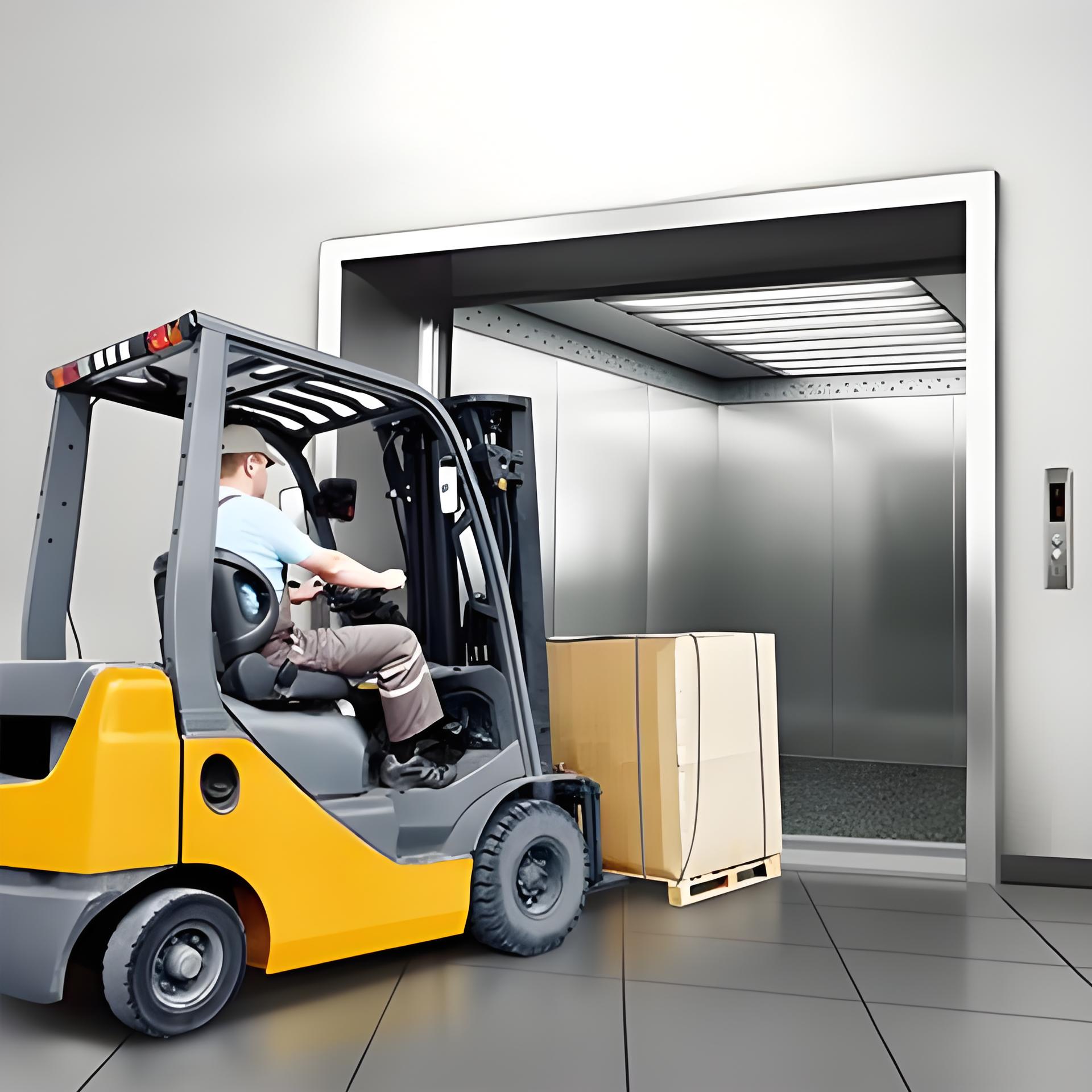
People seeking heavy duty goods lifts usually want one thing: reliable lifting power. Be it a warehouse, a factory, a logistic center, or a commercial building, all rely on such machines in order to make the flow of products easy and safe. But one common practical question they all have before making any purchase or installation is how much weight the heavy duty goods lift should be able to carry.
It is not the same answer in every case, and ranges, usage scenarios, and safety expectations will guide you through how to pick a lift that could serve well in real-world working conditions.
Knowing the Minimum Capacity of a Heavy Duty Goods Lift
A heavy duty goods lift is designed to move materials continuously, not people. As working conditions can sometimes get demanding, it is never a good idea to simply guess the minimum weight capacity.
For most industrial settings, the recommended baseline starts at about 1,000 kg. It is considered the entry-level standard for environments that day in and day out move equipment, tools, boxed goods, small pallets, and bulk items.
For high-demand environments, the ranges that are usually recommended include:
- 1,500 kg for light industrial or mixed-use buildings
- Factories, distribution centres, and lines of production: 2,000–3,000 kg
- 5,000 kg or over for heavy machinery, metal parts, motors, and over-sized material
In other words, a heavy duty goods lift would at least support 1,000 kg, but most modern operations demand far more than this capacity. This would depend on the nature and frequency of your load.
Why Capacity Matters More Than It Appears
Capacity affects so much more than just the weight itself: safety, efficiency, energy usage, and even the life of the equipment.
A heavy duty goods lift that is consistently used at or near its maximum load will wear out quicker, require more maintenance, and become less reliable. That’s why it’s quite common to recommend choosing a lift that has a capacity 20-30% higher than your regular maximum load.
For instance,If the average weight of your pallets is 1,200 kg, then 1,500 kg lift would not be enough. With 2,000 kg, the operation could be much safer for long periods of time.
This buffer protects:
- Fatigue in the motor due to constant overload stress.
- Fatigue assessment of the steel structure serves to
- Braking system from excessive wear
- Protect the lifting cables or chains from premature failure
Probably the biggest mistake made in material handling planning is underestimating capacity.
Typical Application Scenarios and Capacity Planning
Knowing in which place the heavy duty goods lift is being used will help explain how much weight that it’ll be moving. Different industries carry different load profiles, seasonal variations, and operational demands.

1. Warehousing and Logistics
Logistics goods are rarely very lightweight. Pallets, bundled packages, boxes of different density, mix shipments add up in weight quickly.
Recommended Capacity: 2,000–3,000 kgs
This ensures that the lift will handle loads that are stacked with no need to stop operations for repacking.
2. Manufacturing Plants
Every day, different types of factories have to move raw materials, metal parts, molds, and even heavy machinery. Some loads are of irregular shapes, while others are amazingly dense.
Suggested capacity 3,000–5,000 kgs
Many machines and industrial parts weigh in excess of that of a single pallet.
3. Automobile and Machine Service Centers
These engines are extremely heavy, as are the tires, the transmissions, and all the other mechanical parts.
Recommended tonnage: 2,500–5,000 kgs
The lifts need to be stable enough to allow for continuous loading and unloading.
4. Areas of Storage at Retail
Although lighter compared to an industrial setting, retail merchandise also needs organized vertical movement.
Recommended capacity: 1,000–1,500 kgs
This suits packaged goods, inventory boxes, and stockroom deliveries.
5. Food and Beverage Plants
Items here include bulk raw materials, liquids, glass bottles, and the like that may amount to surprising weight.
Capacity recommended: 1,500–3,000 kgs
You can match the load characteristics in your industry and assess what “minimum capacity” will meet your actual needs.
Design Factors Affecting Weight Carrying Capacity
The size of a motor within a heavy duty goods lift does not define it; weight capacity can be defined by engineering choices combined, including:
- Lifting mechanism: Hydraulic, traction or chain-driven
- Structure of platform and steel frames with reinforcement
- Guide rails and balancing systems
- Motor power – torque output
- Braking and Safety Locks
- Shock-absorbing systems for irregular loads
This is why two lifts with similar capacities can behave differently under real conditions. Emphasis, like مصعد GOTS, on increased stability of the load and energy-efficient design allows it to move heavy loads smoothly even during peak production hours.
Safety Requirements for Calculating Minimum Capacity
Going with a heavier capacity lift rather than just the exact weight required is not only practical but a safety requirement to standards in the field of industrial equipment: never operating the goods lift above 80% of the rated capacity.
Accounting for the weight of pallets, crates, or containers, not just the product. Avoidance of uneven load distribution where feasible ensuring periodic checking of cables, chains, and brakes and planning for future load growth within expanding operations
Due to such guidelines, the “minimum capacity” of a heavy duty goods lift must always be more than your current maximum load.
Final Answer: What is the Minimum Capacity?
A heavy duty goods lift must at least support 1,000 kgs; in real industrial environments the minimum capacity recommended is around 1,500 to 2,000 kgs.
A more realistic standard in manufacturing, logistics, or machinery handling for safety and smoothness in long operation falls between 3,000 to 5,000 kg.