




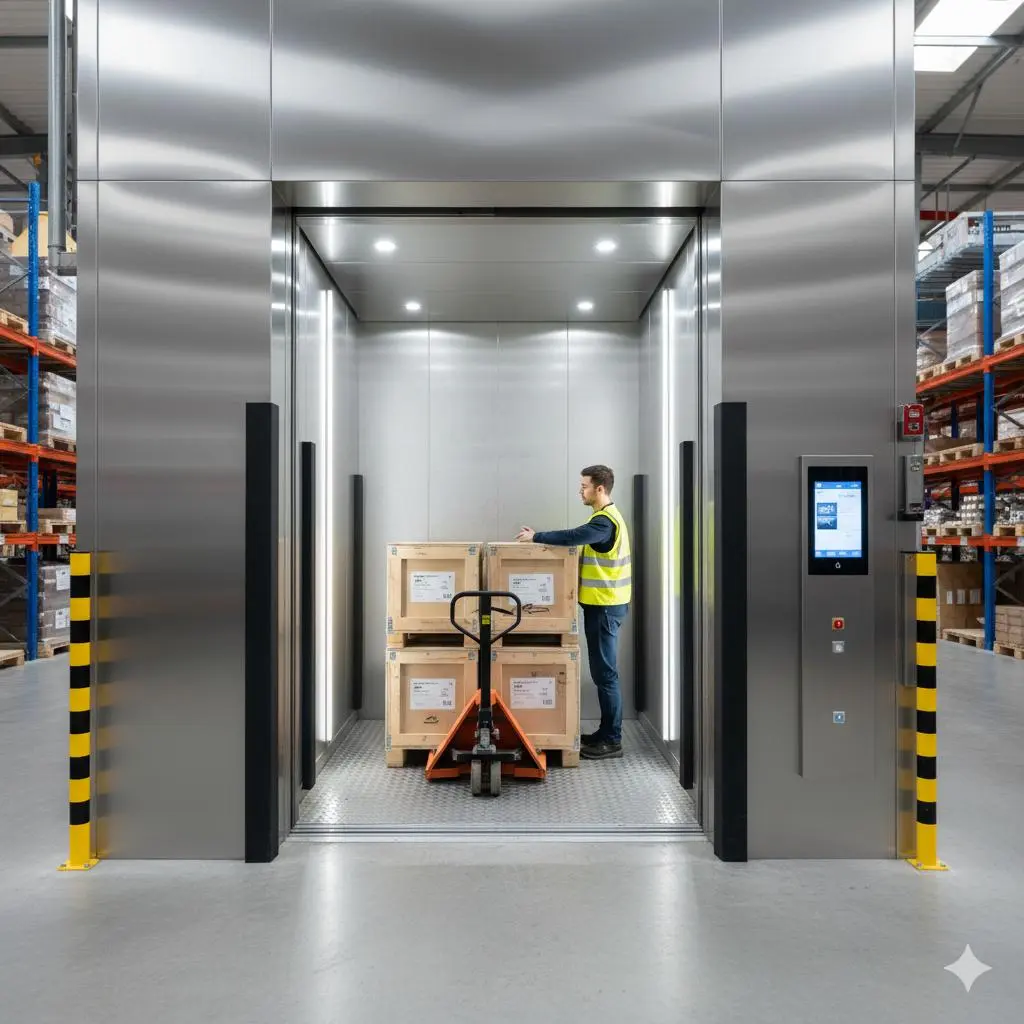
Today, the efficiency of vertical transport within industrial and commercial businesses affects the performance of the entire supply chain process. Employing manpower to lift heavy cargo through multi-storey buildings such as warehouses, retail stores, and manufacturing facilities is costly and increases the risk of occupational hazards. The installation of an appropriate Small Cargo Elevator will be an effective way to enhance logistics management and maximize space usage. But how to find the perfect elevator when you face a variety of specifications and engineering features? This guide will help you understand the important aspects to consider.

1. Determine the Load Capacity of Your Small Cargo Elevator
When choosing a Small Cargo Elevator, the main aspect to take into account is the assessment of your exact weight demands. Depending on it, the structural design, the choice of the drive system, and the robustness of the system are determined.
Operational and Maximum Load Assessment
Do not determine your equipment solely by the cargo average weight. Consider the maximum weight of a single item or the weight of one load per cycle and increase it by 15% – 20% so that your structure would be protected from overload accidents.
Light-to-Moderate Uses (300 kg – 1000 kg):
This type of lifts will suit for storing electronic parts, clothing stockrooms, or small retail stores. In such places, the major task is handling boxed cargo or light pallets. An example of such a cargo lift is a small, compact hydraulic lift of 500 kg.
Applications in Heavy-Duty Industry (1000 Kg – 2000 Kg+)
Necessary for manufacturing plants and distribution hubs moving heavy machinery parts, raw materials, or bulk pallets. A typical example in this segment is the GOTS Elevator RD-H01, engineered specifically for industrial facilities requiring high-frequency, heavy-tonnage vertical transport.
Therefore, the elevator integrates:
- Safety gear protection
- Blocking valve systems
- Intelligent control monitoring
2. Measure Available Installation Space for a Small Cargo Elevator
Accurate spatial measurements are vital before purchasing any lifting machinery. Planning the installation site requires balancing building constraints with smooth loading and unloading workflows
Key structural parameters include:
- Shaft Dimensions: Interior width and depth of the hoistway set limits to the maximum dimensions of the lift frame from the outside.
- Cabin Dimensions: Dimensions of length, width, and clearance height should provide space for carrying your largest cargo or standard pallets (like standard pallets 1200 mm × 1000 mm).
- Overhead and Pit Depth: Standard lifts usually require more than 1500 mm deep pits and 3500 mm overhead clearance. In the case of Small Cargo Elevators, there are special models with shallow pits (300 mm deep) and even without pits at all.
| Spatial Metric | Primary Focus | Recommended Baseline Range |
| Hoistway Space | Structural opening and load-bearing capacity | Allow 200–300 mm clearance beyond cabin exterior |
| Cabin Space | Unobstructed entry for hand trucks/pallets | Minimum height clearance of 2000 mm recommended |
| Pit Depth | Accommodation of bottom buffers and mechanical base | Low-pit (100–500 mm) or standard pit (>1200 mm) |
3. Evaluate Essential Safety Features for a Small Cargo Elevator
Safety remains the paramount factor in industrial equipment selection. Evaluating a Small Cargo Elevator requires verifying its standard safety features against local building codes and occupational safety regulations.
Anti-Fall Mechanisms and Overload Protection
Every commercial unit must incorporate a mechanical safety gear coupled with an overspeed governor. If suspension cables or chains lose tension, mechanical wedges engage the guide rails within milliseconds to prevent free-fall. Additionally, electronic overload sensors automatically trigger an audible alarm and disable operation if weight exceeds rated limits by 5%.
Door Interlocks and Emergency Controls
Electromechanical interlocks make sure that doors are locked until the car comes to a complete stop on a proper floor. In the same way, the system does not operate when any gate is unlocked. Emergency stops and Uninterruptible Power Supply (UPS) auto-lowering systems should be provided to allow for the safe loading and unloading of cargo in case of power failure.
4. Consider Installation and Maintenance Expenses
The Cost of Ownership of a Small Cargo Elevator covers the cost of purchasing the equipment, preparing the site for its installation, actual installation, and maintenance.
Engineering Installation and Site Adaptations
Proper installation directly influences equipment performance and lifespan. Poor alignment causes excessive rail wear, operational noise, and premature component fatigue. Buyers typically choose between two approaches: commissioning basic mechanical assembly through general contractors or utilizing specialized engineering services. A typical example of the latter is the RD-H03 5Tons Load Capacity Freight Cargo Elevator Lift, which handles precision shaft alignment, electrical integration, and regulatory compliance testing prior to handoff.
As a result, it achieves:
- Precise floor leveling
- Smooth acceleration and deceleration
- Reduced mechanical wear
Preventive Maintenance and Post-Warranty Assistance
Proper maintenance avoids unnecessary downtime costs. Choose vendors that can offer quarterly checks, timely access to spares, and swift technical assistance.
5.Conclusion
In order to select a Small Cargo Elevator effectively, one must consider weight capacity, space limitations, safety aspects, and installation needs. By taking precise measurements of the workplace and setting up proper operating parameters, one can substantially increase material handling productivity and ensure a safe working environment.
If you have any inquiries related to equipment selection, shaft measurement, or technical parameters, feel free to contact GOTS Elevator.
6.FAQ
Q1: What is the average duration needed to install a small cargo elevator?
A: Installation of standard modular elevators usually takes about 3-7 working days after site preparation in order to install and calibrate them.
Q2: Is it possible to install a small cargo elevator in a building without a pit?
A: Yes, it is possible. There are many modern solutions that allow installing the cargo lift without a pit or using a shallow pit (100-300 mm) or an access ramp.
Q3: How often should preventive maintenance take place?
A: To ensure proper operation of the elevator, full inspections by qualified specialists should be carried out no less than 4 times a year.
Q4: What is the difference between hydraulic and traction cargo lifts?
A: The difference is that hydraulic cargo lifts are more affordable and have greater lifting capacity, while traction cargo lifts are faster and energy efficient.
Q5: Is it necessary to have a permit for the installation of a small cargo elevator?
A: Yes, it is mandatory to get such a permit in order to use a cargo lift according to local mechanical codes and official safety regulations.