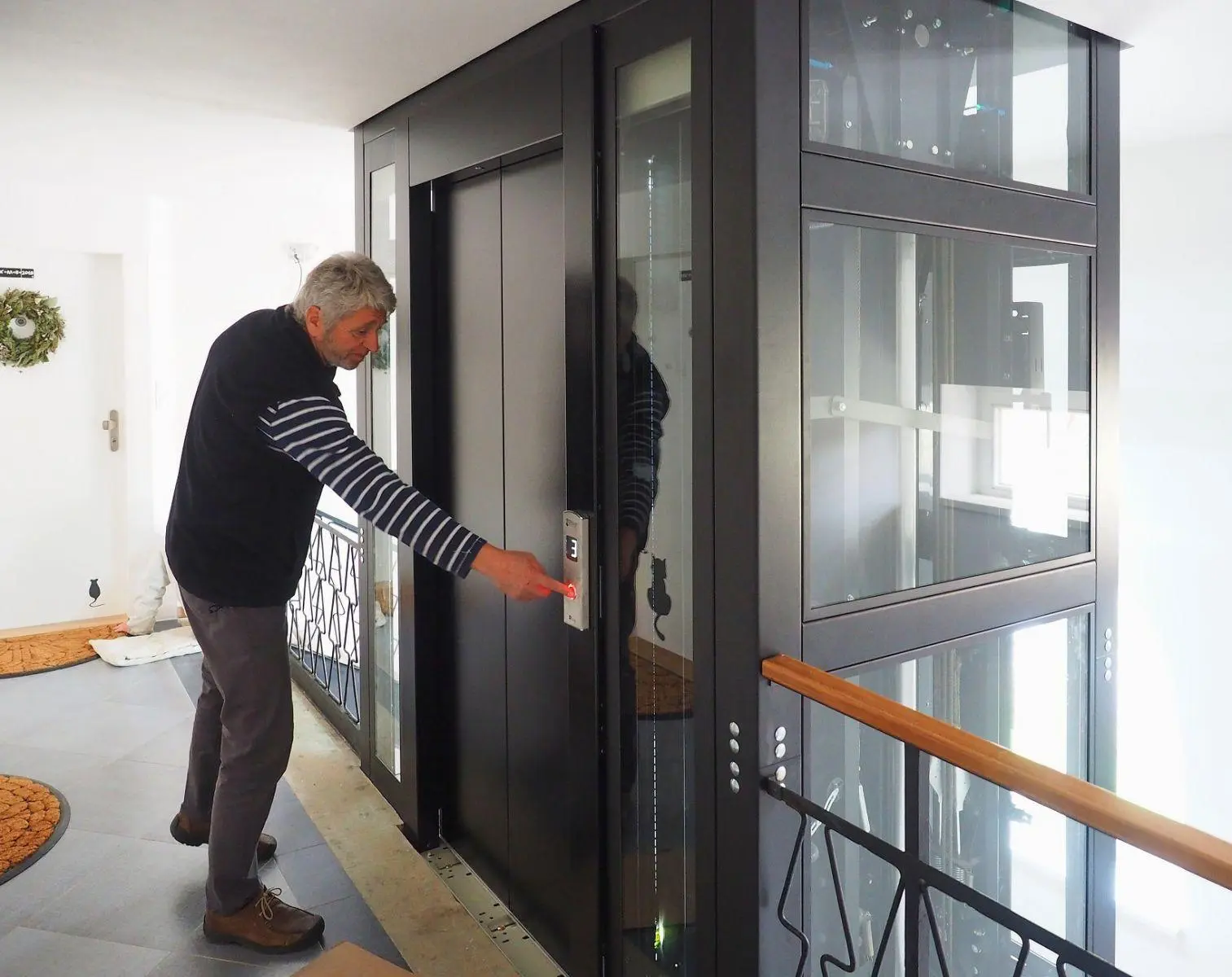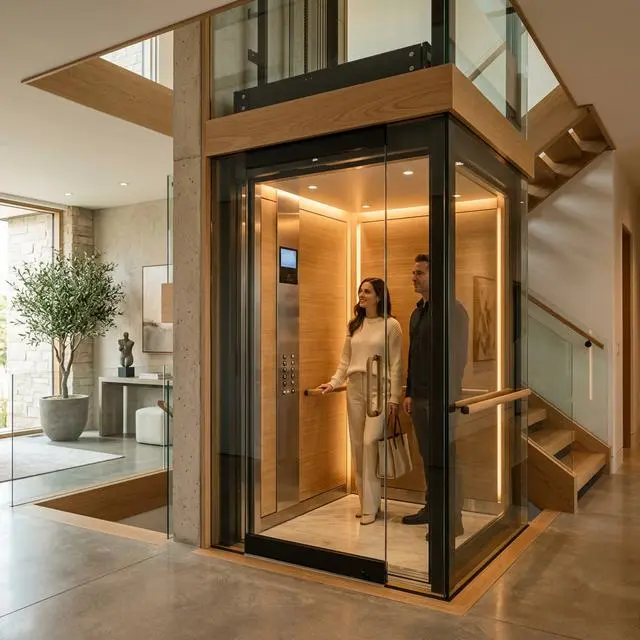





A panoramic glass elevator is a vertical transportation system that uses large glass panels to allow passengers to enjoy beautiful views as they move between floors. These elevators are in use by many buildings today, such as shopping centers, hotels, offices, and residential towers, to create an open and modern atmosphere.
Types of Panoramic Elevators
Panoramic glass elevators come in types, considering the building’s needs. Understanding these types helps buyers in decision-making, relating to space and patterns of use.
1. Indoor Observation Elevators
These are installed within malls, office lobbies, museums, or atriums. Their purpose is to provide views of the interior space while one is moving vertically. Indoor panoramic glass elevators are normally made up of curved or flat glass panels with soft lighting and compact machine-room solutions.
2. Outdoor Panoramic Glass Elevators
These elevators are installed outside of the building facades and offer great outdoor scenery to the passengers. This type of glass requires stronger weather resistance, while frames are usually made of reinforced aluminum or stainless steel. Not less important, in an outdoor panoramic glass elevator, is taking into consideration such factors as wind load, temperature shifts, and strong UV exposure.
3. Cylindrical or Semi-Cylindrical Elevators
These models are characterized by a rounded cabin design. They look so marvelous and are normally used in luxury hotels or tourist scenic buildings. Curved glass allows a wider view to improve the passenger experience.
Structure of a Panoramic Elevator
The panoramic glass elevator design also balances aesthetics, strength, and comfort. Although it might be visually simple from the outside, the inside system has integrated multiple engineered elements.
1. Glass Walls End
The cabin walls are normally made in three or more layers of laminated or tempered safety glass. These layers strengthen the impact resistance while giving a boost in vision capability. Transparency should be designed with care so that the structure remains strong yet not blocked by a visual effect.
2. Frame and Support System
While the appearance of the elevator can be described as “all glass,” in reality, there is a backbone to it, which normally is a stainless steel or aluminum alloy frame. These materials provide a good resistance to corrosion and the rigidity needed. The design of the frame affects both safety and aesthetic effect, especially in installations involving large curved glass panels.
3. Traction and Driving System
Like regular elevators, panoramic glass elevators depend on either traction or hydraulic systems. Traction systems are more standard in high-rise installations due to their better energy efficiency and smoothness of operation. Hydraulic systems apply to low-rise buildings and offer quieter performance, though maintenance is more frequent.
4. Lighting and Interior Setup
Lights add much to the panoramic experience. Most panoramic glass elevators today employ either LED strips, soft ceiling lighting, or floor-edge lighting to create a clean and bright environment. Aesthetics and safety are further enhanced with stainless steel and glass handrails, along with anti-slip flooring.
Features of Panoramic Elevator
1. Architectural Integration
Most panoramic glass lifts become part of the building’s visual identity, whether enriching interior design in a mall or making the hotel lobby more interactive. An elevator may serve both for transportation purposes and as a design element.
2. Strong Structural Safety
While seeming fragile, panoramic glass elevators are nonetheless designed for stability: laminated glass, robust frames, and secure means of attachment make them highly reliable. Brands like GOTS Elevator adopt rigid quality control to ensure safety and clarity of vision.
3. Energy Efficiency in Operations
Energy-efficient motors, LED lighting, and smart control systems are the features featured in most modern panoramic glass elevators, saving power without necessarily sacrificing performance.
Understanding the Investment: Panoramic Elevator Costs
A panoramic glass elevator is more expensive than a standard commercial elevator due to the special materials required and the customization necessary. Pricing is dependent on many factors:
1. Glass Specifications
Thicker laminated or curved glass increases the price. Outdoor models also require UV-resistant coatings and reinforced brackets.
2. Cabin shape and size
Most curved, circular, or specially shaped cabins require special molds, which increases the material and manufacturing costs.
3. Conditions of Installation
Since an indoor panoramic glass elevator may demand some structural remodeling or additional structural support, when placed outdoors, the machinery would need to be weatherproofed, and substantial rails would become necessary.
4. Floor Travel and Load Capacity
Since the panoramic glass elevator has to cover more floors, it will require a large motor and traction system. Other factors, such as load capacity, also determine the selection and cost of the system.
الخاتمة
Understanding the structure, function, types, and installation considerations of panoramic glass elevators would help building owners select a system to suit their design goals and long-term needs. مصعد GOTS‘s panoramic glass elevators assure a safe, smooth, and aesthetic ride. For further information, visit our website.