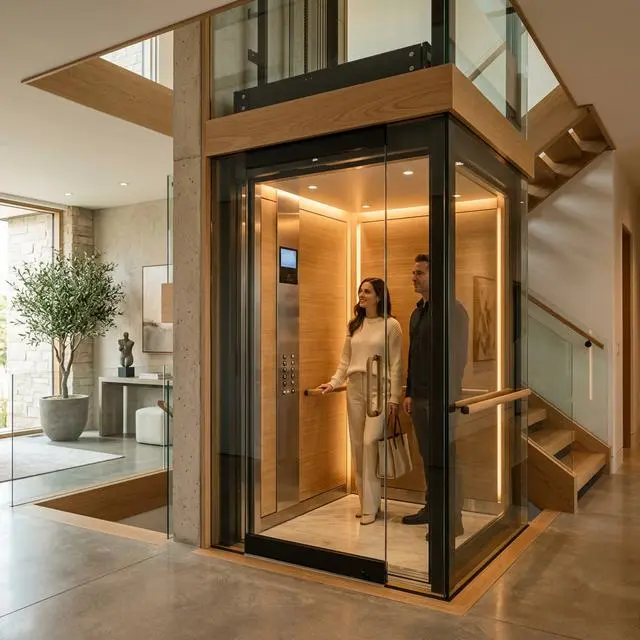





The history of the elevator is an interesting story that traces the history of urbanization, technological development in the field of engineering, and the formation of the modern real estate market. Since the crude rope-and-pulley constructions in the inception of lifts, lifts have been indispensable to commercial, residential, and industrial structures in the world.
History: Early Developments of the History of Elevator
The first chapter of the history of elevator refers to ancient civilization. According to the historical records, the simple lifting platforms were powered using human or animal force in ancient Egypt and Rome. These crude machines were more of a moving heavy commodity and not people and there was no safety whatsoever. Although they were basic, they formed the foundation of the vertical lifting ideas that were to be developed throughout the centuries.
Industrial Revolution: A Point of Transition
One of the greatest advances in the history of elevators was in the 19th century as a result of the Industrial Revolution. The development of the safety elevator, that occurred in 1853, made the use of passenger lifts possible since cable failure was greatly diminished.
This invention revolutionized the architecture in cities as multi- story buildings were possible to be constructed and even skyscrapers. To developers of real estate and constructors, elevators became not just luxurious functions but absolute necessities.
Increasingly, Electricity and Modernization
With the spread of electricity, elevators began to develop very quickly. Steam and hydraulic systems were replaced by electric motors, with the benefit of being smoother and more efficient. The invention of automatic doors, push-button controls, and standardized safety systems was also another important step in the history of elevator. These enhancements made the operation more reliable and less expensive, and made elevators more usable commercially.
Intelligent Elevators and Bespoke Solutions
The history of elevator today is going into the digital age. An elevator nowadays incorporates intelligent control systems, energy-efficient technologies, and sophisticated safety management. GOTS Elevator is a manifestation of this change, as it provides individualized elevator models depending on the needs of the building.
GOTS Elevator supports customization and guides users to choose GOTS Elevator, whether in residential towers, commercial complexes, or special-purpose buildings.
The point of History of Elevator to Industry Professionals.

Knowledge of the development of elevators assists agents, builders, and developers in making decisions. The familiarity with previous constraints and the latest technologies is a way to plan it better, make it safer, and be able to consider the long-term value.
ЧАСТО ЗАДАВАЕМЫЕ ВОПРОСЫ
Q1: Why is the history of elevators significant to construction projects today?
It teaches the professionals of the industry about safety norms, power capacity, and technological advancement that allows them to select a better system and design a building.
Q2: What was the effect of elevators on urban development?
High-rise buildings became possible because of elevators, making it convenient to enable cities to develop vertically and to maximize the use of land.
Q3: What does the modern elevator have in common with the early design?
Innovative elevators have intelligent controls, increased safety standards, energy efficiency, and customizations.
Q4: Does GOTS Elevator offer personalized elevator solutions?
Yes, GOTS Elevator is customizable and enables the clients to select the designs and specifications of the elevator according to the project requirements.
Q5: What are the key customers of GOTS Elevator?
The primary partners that GOTS Elevator collaborates with are elevator agents, although builders and real estate developers are also important partners.